


Secure Your SAP Infrastructure Throughout Every Competitive Moment | Explore Our Basis Services for RISE with SAP

SECURITY OPERATION CENTER

Security Operation Center (SOC) is a facility that houses an information security team responsible for monitoring and analyzing an organization’s security posture on an ongoing basis. The SOC team’s goal is to detect, analyze and respond to cyber security incidents using a combination of technology solutions and a strong set of processes. Security operations centers are typically staffed with security analysts and engineers as well as managers who oversee security operations. SOC staff work close with organizational incident response teams to ensure security issues are addressed quickly upon discovery.

Rather than being focused on developing security strategy, designing security architecture or implementing protective measures, the SOC team is responsible for the ongoing, operational component of enterprise information security. Security operations center staff is comprised primarily of security analysts who work together to detect, analyze, respond to, report on and prevent cyber security incidents. Additional capabilities of some SOCs can include advanced forensic analysis, cryptanalysis and malware reverse engineering to analyze incidents.

The first step in establishing an organization’s SOC is to clearly define a strategy that incorporates business-specific goals from various departments as well as input and support from executives. Once the strategy has been developed, the infrastructure required to support that strategy must be implemented. The security operations center also monitors networks and endpoints for vulnerabilities in order to protect sensitive data and comply with industry or government regulations.

The key benefit of having a security operations center is the improvement of security incident detection through continuous monitoring and analysis of data activity. By analyzing this activity across an organization’s networks, endpoints, servers and databases around the clock, SOC teams are critical in ensuring timely detection and response of security incidents. The 24/7 monitoring provided by a SOC gives organizations an advantage to defend against incidents and intrusions regardless of source, time of day, or attack type. Security operations center helps to close the gap between attackers’ time to compromise and enterprises’ time to detection, and stay on top of the threats.

Dictionary Home Page
SERVICES AND SOLUTIONS

Let's build your IT infrastructure together!

Managed Cloud
GlassHouse Cloud Services
Managed Cloud Services Tailored for Finance Industry Compliance
Managed Services
Professional Services
GlassHouse Cloud Services

Infrastructure as a Service

Maintain and utilize all IT infrastructure resources for your workloads on GlassHouse Cloud in a fully managed way.

Explore
GlassHouse Cloud Services

SAP as a Service

Rapidly expand your business with integrated SAP infrastructure from the cloud. Unlock the full potential of SAP solutions in the cloud!

Explore
GlassHouse Cloud Services

Container as a Service

Providing manufacturer-independent, fully open-source Kubernetes container infrastructure management.

Explore
GlassHouse Cloud Services

Object Storage as a Service

Securely and scalably store your unstructured data. Benefit from dynamic capacity and high availability today!

Explore
GlassHouse Cloud Services

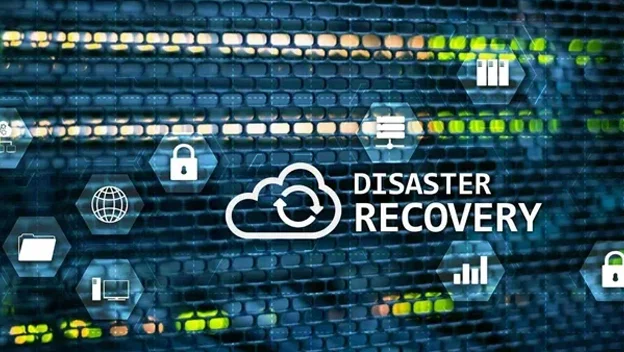
Disaster Recovery as a Service

Restore your data and applications seamlessly without loss using geographically redundant infrastructure for disasters!

Explore
GlassHouse Cloud Services

Backup as a Service

Backup workloads in a secure and high-performance cloud environment to ensure business continuity, data redundancy, and rapid recovery across all scenarios.

Explore
GlassHouse Cloud Services

Monitoring as a Service

Ensure the continuous monitoring and analysis of your infrastructure and application performance data every minute of every day, all year round, from a centralized location with GlassHouse's Monitoring as a Service (MaaS)!

Explore
GlassHouse Cloud Services

Firewall as a Service

Protect your operations from cyber threats by fulfilling your security policy and rule management requirements with a cloud-managed firewall service. Safeguard your business against potential security breaches.

Explore
GlassHouse Cloud Services

Web Application Firewall (WAF) as a Service

Ensure the uptime of your applications by preventing malicious data packets from damaging your application layer!​

Explore
GlassHouse Cloud Services

IPS as a Service

Detect all anomalies in your IT infrastructure instantly and strengthen the immune system of your IT infrastructure.

Explore
GlassHouse Cloud Services

Load Balancer as a Service

Ensure the performance of your web servers against fluctuating network traffic loads with GlassHouse Load Balancer as a Service.​

Explore
GlassHouse Cloud Services

Antivirus as a Service

Maintain the security of all your servers by implementing regular scans and protection against viruses and other threats through a centralized cloud-based control system!

Explore
GlassHouse Cloud Services

Vulnerability Management as a Service

Stay on guard against security vulnerabilities and zero-day attacks! Bid farewell to operational burdens such as version incompatibilities and update management!

Explore
On Premise Solutions
Hardware and Software Solutions
Network and Security Solutions
Professional Services

Blog content that may be of interest to you

The Role of LLMOps in Enterprise Operations
07 September 2026

The Role of LLMOps in Enterprise Operations

LLMOps helps manage the development, testing, deployment, monitoring, and improvement processes of artificial intelligence applications built with large language models. In enterprise environments, it enables model performance, cost, security, data management, and user experience to be monitored together. Unlike the MLOps approach, it focuses on the unique requirements of LLMs. This enables companies to scale artificial intelligence projects in a more structured, measurable, secure, and sustainable way. Read on for more details.

Read More
Cloud or On-Premise? How to Make the Right Choice for AI Infrastructure
17 August 2026

Cloud or On-Premise? How to Make the Right Choice for AI Infrastructure

When choosing between cloud and on-premise infrastructure for artificial intelligence projects, organizations should consider not only cost but also data security, computing power, scalability, and technical team capacity. While cloud solutions provide flexible resource usage and rapid deployment, on-premise infrastructures can offer greater control over data and systems. In this article, we examine the advantages and cost differences of both approaches, which types of businesses they may be more suitable for, and the key factors to consider when selecting AI infrastructure.

Read More
When Should GPU Rental Be Preferred for Artificial Intelligence Projects?
11 August 2026

When Should GPU Rental Be Preferred for Artificial Intelligence Projects?

GPU rental can be preferred to access the high computing power required for artificial intelligence model training, fine-tuning, inference, and temporary AI projects. This method, which can reduce high hardware investments, also enables resources to be scaled according to demand. It can provide advantages in terms of cost and operational flexibility, particularly for projects with temporary GPU requirements. Start reading now for further details!

Read More
What Should You Consider When Choosing a Vector Database?
10 August 2026

What Should You Consider When Choosing a Vector Database?

Vector databases provide important infrastructure for semantic search and similarity queries in artificial intelligence applications. In this article, we cover how vector databases work, how they compare with vector indexes, their advantages, and the performance, scalability, security, and integration considerations to evaluate during the selection process.

Read More
What Is Data Visualization, What Are Its Steps, and Why Is It Important?
03 August 2026

What Is Data Visualization, What Are Its Steps, and Why Is It Important?

Data visualization is an analytical method that makes complex datasets easier to understand through charts, tables, maps, and other visuals. In this article, you can explore in detail what data visualization is, its fundamental principles, its implementation stages, and why it is important in the business world. You can also learn about widely used data visualization tools such as Google Looker Studio, Power BI, Tableau, and Python, what they are used for, and how the right visualization techniques contribute to decision-making processes. Start reading now!

Read More
What Is Rancher and How Does It Simplify Kubernetes Management?
18 August 2026

What Is Rancher and How Does It Simplify Kubernetes Management?

Rancher is an open-source platform that enables centralized management of Kubernetes clusters. By bringing multi-cluster management, user authorization, security policies, and monitoring processes together in a single panel, it improves operational efficiency. It does not replace Kubernetes; instead, it operates as a management layer that complements it. It reduces complexity, particularly in hybrid and multi-cloud environments. Rancher is a powerful solution that makes Kubernetes infrastructures easier to manage for developers and operations teams.

Read More