





What Is a Vector Database?
Vector databases are used to store numerical vectors generated by artificial intelligence models and perform similarity searches between these vectors. When text, an image, or another type of data is processed by a model, it can be converted into a high-dimensional array of numbers representing specific characteristics of the content. This representation allows an application to evaluate how semantically similar two pieces of content are rather than simply searching for specific words. For example, when a user searches for “password reset issue” within a software company's technical documentation, content explaining the same topic can be found even if the document does not contain exactly the same wording. This approach provides an important infrastructure component, particularly for AI-powered search, recommendation systems, document analysis, and question-and-answer applications.
What Is the Difference Between a Vector Index and a Vector Database?
Although the concepts of a vector index and a database are related, they do not refer to the same thing. A vector index refers to the data structure and search mechanism used to perform similarity searches more quickly across large numbers of vectors. Solutions such as PostgreSQL vector database, on the other hand, can not only index vectors but also manage them together with other application data. Put simply, an index can be considered a mechanism that accelerates search, whereas a database has broader responsibilities such as storing, querying, updating, authorizing, and managing data. This distinction is particularly important for software teams that want to incorporate existing relational databases into artificial intelligence projects. In some projects, using the vector search capabilities of an existing database may be more practical than setting up a separate system.
How Does a Vector Database Work?
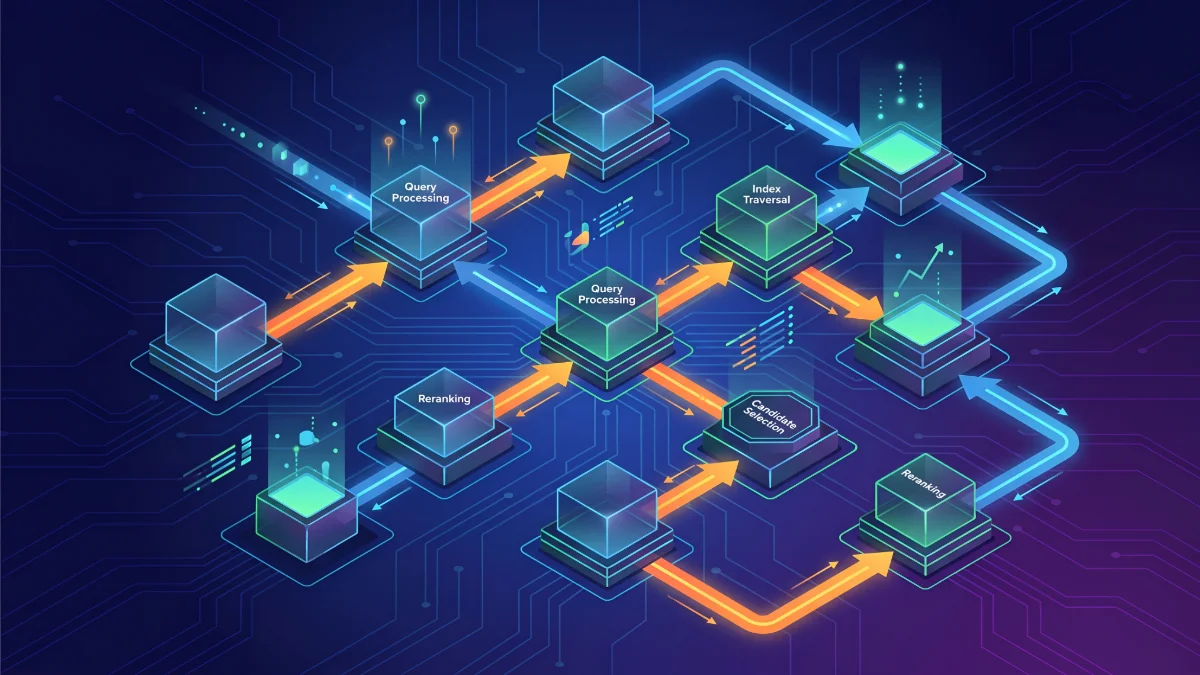
In the first step of the process, application data is converted into numerical representations known as embeddings through artificial intelligence models. The resulting vectors are stored in the database, and an appropriate indexing method is used to enable fast searches. When a user later submits a query in natural language, the query is similarly converted into a vector. The system calculates the distance or similarity between the query vector and the other vectors stored in the database to identify the most relevant results. In this way, unlike traditional search based on exact word matching, results can be generated according to semantic similarity. This process plays a critical role, particularly in RAG architectures. In a RAG vector database structure, content related to the user's query is first retrieved from the database, after which this information is passed to the large language model as context, helping the model generate more relevant responses.
What Are the Advantages of Using a Vector Database?
One of the most important advantages of vector-based data infrastructures is their ability to perform semantic searches efficiently across large datasets. While traditional search requires specific words or expressions to be found, vector search can evaluate the semantic similarity between content. This capability can provide more successful results, particularly in applications where users express their questions in different ways. It also makes it easier to identify similar products, documents, or content in AI-powered recommendation systems. In software development processes, code snippets, technical documents, and error logs can also be associated based on similarity. In addition, when appropriate indexing techniques are used, the ability to retrieve results quickly from millions of vectors provides an important advantage for real-time applications.
For more detailed information about database types, you can read our blog post titled What Is a Database?.
What Should You Consider When Choosing a Vector Database?
When selecting a solution, the first step is to clearly define the project's data volume, query intensity, and expected response time. When choosing a vector database, testing the solution with the organization's own data rather than relying solely on theoretical performance figures provides more reliable results. In addition, supported indexing methods, distance metrics, vector dimension limits, and filtering capabilities should be examined. In projects where data is continuously updated, how the system behaves when new records are added or existing records are modified is also an important criterion. Integration with the rest of the software architecture, API support, SDK options, and compatibility with the programming languages in use should also be included in the decision-making process. In addition, whether the solution will be used in the cloud, on-premises, or in a hybrid environment should be determined, and data security and operational requirements should be evaluated accordingly.
While working with a few thousand or several hundred thousand vectors may be sufficient in the initial stages of an artificial intelligence application, the amount of data can grow to millions or even more records as the application scales. For this reason, future workloads should be taken into account during the selection process alongside current requirements. Latency per query, concurrent query capacity, index creation time, and data update performance are among the areas that should be tested in particular. The goal here is not simply to find the system that delivers the highest performance, but to establish a balance between performance and cost that is appropriate for the project's needs. In addition, the available horizontal or vertical scaling options as data volumes grow and how easily the system can support this growth should be examined in advance.
Data used in artificial intelligence projects may have different levels of sensitivity, ranging from a company's technical documentation to customer records. For this reason, issues such as where the data is stored, how it is protected during transfer and at rest, how access permissions are managed, and how records are deleted should be carefully examined when selecting a platform. Particularly in multi-user systems, mechanisms must be available to ensure that users can access only the data for which they are authorized. Audit logs, authentication options, and integration with the organization's existing security infrastructure are also among the areas that should be evaluated. In addition, it is important to understand how backup and disaster recovery processes are managed. When the database structure is at the center of a critical artificial intelligence application, it should not be overlooked that data loss or an access outage can affect the entire application.
By exploring the AI platform services developed by GlassHouse's expert team, you can bring scalable artificial intelligence solutions to your business.
Adding a new data infrastructure to an existing system can create an additional management burden for development and operations teams. For this reason, the compatibility of the solution with the organization's existing technology stack should be investigated in advance. The availability of client libraries for the programming languages in use, sufficiently documented APIs, and compatibility with existing authentication systems can reduce integration time. If the organization already has a strong relational database infrastructure, it should also be evaluated whether setting up a separate system is truly necessary. The objective should not be to increase the number of technologies, but to create an architecture that meets the application's requirements with the least operational complexity.