





What Does Software Bot Mean?
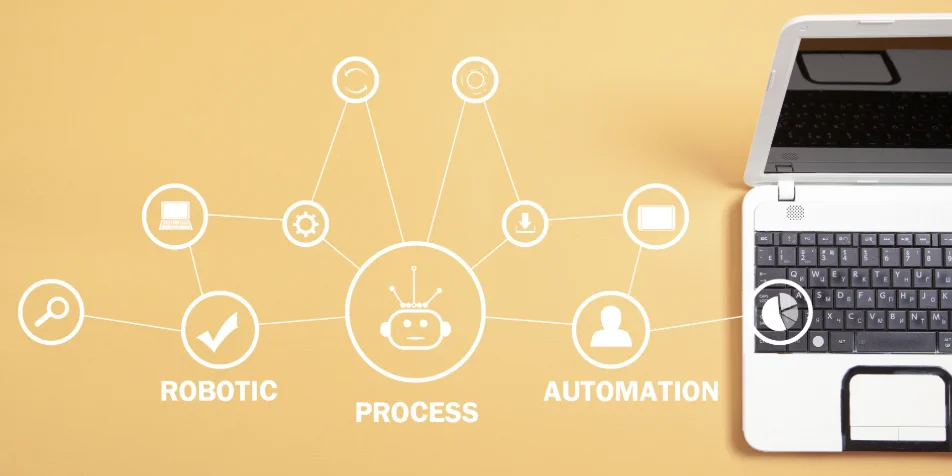
RPA, formed from the initials of the English expression "Robotic Process Automation," refers to the process of using digital robots or software bots to perform tasks in business processes. Manually executed and time-consuming business processes are accelerated by being purged of human error thanks to RPA technology, which directly increases operational efficiency and customer satisfaction. In short, the answer to the question what is RPA can be given as the technology that ensures repetitive operational and IT-focused business processes are completed automatically by software bots (digital workforce). By continuing to read, you can reach detailed answers to the questions "What does a software bot mean?", "Why and where is RPA used?", and "What is the importance of cloud-based RPA?".
The software bot, the subject of robotic process automation, is a software program designed to ensure specific jobs are done. These programs are developed to perform various tasks, from simple to complex, automatically and with minimum error. Advanced RPA bots mimic keyboard and mouse movements made by a human on a computer screen to interact with applications (ERP, CRM, etc.) at the interface level and fulfill rule-based tasks completely. Among the fundamental duties of software bots are tasks that take time to do manually, such as data entry, reporting, file moving, email sending, data transfer between systems, and repetitive office processes. In this way, both operational efficiency increases and human-induced error rates are significantly reduced. These programs, used especially in areas such as finance, human resources, customer services, and IT operations, have the advantage of being able to work uninterruptedly at all hours of the day. Moreover, software bots supported by artificial intelligence and machine learning today do not only fulfill pre-defined tasks but can also contribute to decision-making processes by learning from data. In this aspect, software bots are accepted as one of the fundamental building blocks of digital transformation projects.
Why is RPA Technology Used?
As briefly mentioned in the sections above, the main purpose of use of RPA technology is to ensure that rule-based and repetitive business processes in different sectors are carried out automatically without the need for human intervention. It is possible to see the details of why RPA, which is frequently preferred to increase the efficiency of IT processes, automate workflows, increase system agility, reduce costs, and reduce human error, is used below.
Efficiency of IT Processes
RPA technology automates manually executed IT processes, ensuring that work proceeds faster and uninterruptedly. In this way, system performance increases and the operational burden decreases.
Automation of Workflows
Repetitive and rule-based workflows can be executed with RPA without the need for human intervention. This contributes to the standardization of processes and the prevention of time loss.
Increasing Agility
Robotic process automation (RPA) helps to adapt quickly to changing business needs. Updates to processes can be applied in a short time via bots.
Reducing Labor Costs
Thanks to Robotic process automation, jobs requiring intensive human resources are automated. This helps businesses reduce their operational costs.
Eliminating Human Errors
Since RPA bots work by strictly adhering to defined rules, they minimize the risk of human error in operations such as data entry and reporting.
Making the Process More Transparent
Robotic process automation (RPA) records all transactions performed. Thus, the traceability of processes increases and auditing becomes easier.
Who Uses RPA Technology?
Robotic Process Automation (RPA) can be used by all institutions and sectors that have repetitive and rule-based business processes. Especially finance, banking, insurance, e-commerce, telecommunications, healthcare, manufacturing, and public institutions utilize RPA technology in areas such as intensive data entry, reporting, billing, customer transactions, and IT operations. However, not only large-scale companies but also medium and small-scale enterprises wishing to increase their operational efficiency can prefer RPA solutions. It is possible to see the areas where RPA technology is widely used in the list below.
- Finance and accounting processes
- Invoicing and payment transactions
- Human resources operations
- Customer services and support processes
- IT operations and system management
- Purchasing and supply chain processes
- Data entry and reporting operations
- Banking and insurance transactions
- E-commerce order and return management
- Patient and record management in the healthcare sector
- Production and inventory tracking
- Administrative procedures in public institutions
RPA in the Cloud
RPA in the cloud means running robotic process automation solutions in a cloud environment instead of on on-premise infrastructure. Thanks to this approach, while RPA can be used without making additional hardware investments, installation and maintenance processes also become easier. In summary, cloud RPA solutions stand out as an ideal option especially for institutions with flexible and dynamic business structures by offering scalability, remote access, rapid deployment, and cost advantages.
In addition to the topic of "What is Robotic Process Automation?", our article titled What is Machine Learning? might also interest you.