




What is Deep Learning?
With a wide range of uses extending from face recognition systems to the autopilot feature in vehicles, from image enhancement to cyber threat analysis, and from alarm systems to cancer research, deep learning applications are present in almost every area of modern life. By continuing to read, you can find the answer to the question what is deep learning, and learn in detail the working mechanism of deep learning, its differences from machine learning, and its most common forms of application.
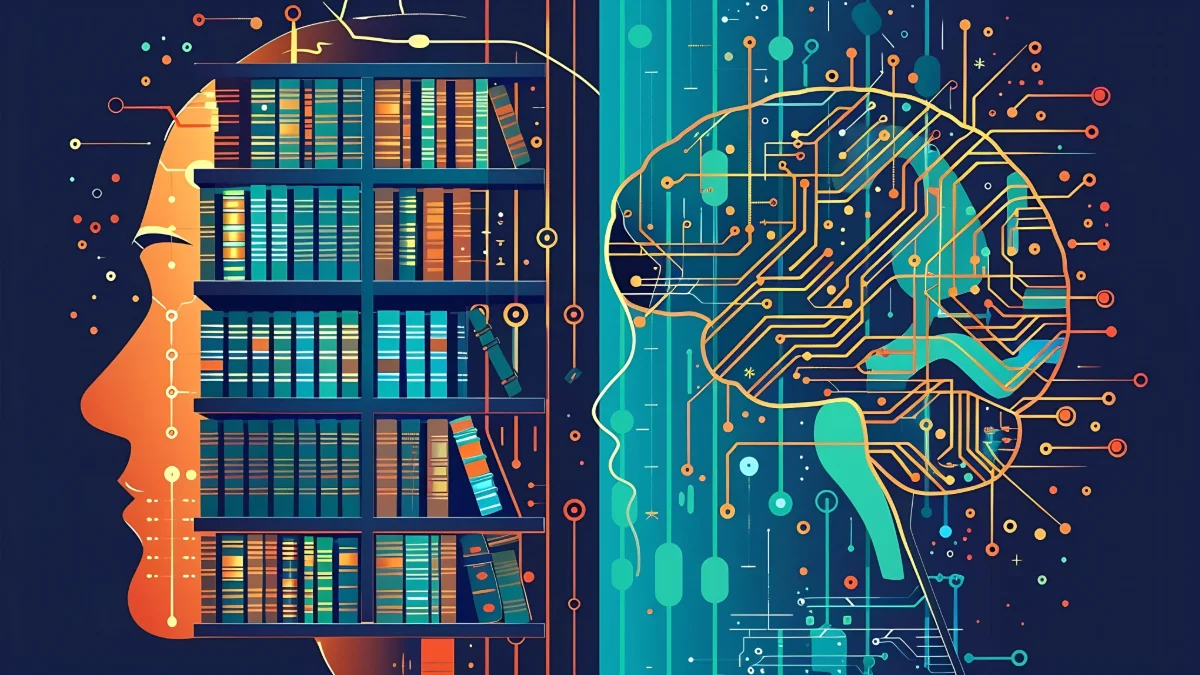
Deep Learning is a sub-branch of machine learning that enables artificial neural networks, inspired by the working principle of neurons in the human brain, to learn by processing large data sets with their multi-layered and complex structures. This architecture, which contains numerous hidden layers, is also referred to as "deep structured learning" or hierarchical learning in the literature. Starting its development in the 1940s and rooted in neural networks, this model further developed and grew over the following decades. Especially after the 2000s, with advancements in GPU (Graphics Processing Unit) technology and the onset of the Big Data era, deep learning models became trainable at a speed not previously possible. Thanks to this technological leap, systems matching or exceeding human performance have been developed in areas such as image recognition, natural language processing, and strategy games.
Deep Learning Models
- Artificial Neural Networks (ANN): Artificial neural networks are the structures forming the basis of deep learning. Developed inspired by neurons in the human brain, these models consist of input layers, hidden layers, and output layers. While data progresses between layers, weights and connections are constantly updated. In this way, the model can learn complex relationships and patterns. These networks are generally used in classification and regression problems.
- Convolutional Neural Networks (CNN): Convolutional neural networks provide high success especially on image and video data. These models automatically learn local features such as edges, shapes, and patterns in images. Thanks to filters and pooling layers, both dimensionality reduction is performed and important visual features are preserved. Convolutional neural networks are widely used in areas such as face recognition, object detection, and medical image analysis.
- Recurrent Neural Networks (RNN): Recurrent neural networks are designed to work with sequential and time-dependent data. These models can influence subsequent predictions by keeping information from previous steps in memory. They offer the advantage of preserving context in time-dependent data. These are frequently preferred in speech recognition, text analysis, and time series forecasting.
- Long Short-Term Memory (LSTM): LSTM networks are designed to solve the "vanishing gradient" problem seen in standard RNNs (Recurrent Neural Networks) and to learn long-term dependencies. This structure, which can store important information and eliminate unnecessary ones, provides more balanced learning in long sequences. It produces effective results in natural language processing and speech technologies.
- Generative Adversarial Networks (GAN): GAN models consist of two separate neural networks (Generator and Discriminator) competing against each other. While the generator network tries to produce new and realistic data, the discriminator network tries to understand whether this data is real or artificial. Thanks to this competitive structure, high-quality visuals, synthetic data, and creative content can be produced.
Deep Learning Techniques
- Activation Functions: Activation functions determine how the neural network will transmit the information it has learned. Thanks to these functions, the model can learn not only linear relationships but also more complex structures. Therefore, activation functions greatly assist in deciding which information is important.
- Backpropagation: Backpropagation is the fundamental technique that enables the model to learn from its errors. The model calculates the difference between the prediction and the actual result and updates the connection weights by propagating this error backwards. As this process is repeated, the model produces more accurate results.
- Regularization: These are techniques used to prevent the model from overlearning the training data (Overfitting) and to increase its generalization ability (e.g., Dropout, L1/L2). The aim is to ensure the model is successful not only on training data but also on new and unseen data. In this way, more balanced and reliable results are obtained.
- Stochastic Gradient Descent (SGD): It is the fundamental optimization algorithm that ensures weights are iteratively updated to minimize the model's error rate (loss function). Data is processed in small batches, and the model is slightly improved at each step. This method accelerates the learning process and offers a more flexible structure.
- Adam Optimization: Adam optimization is a technique that makes the learning process more balanced and efficient. It enables the model to make smarter updates by taking into account the learning rate from previous steps. In this way, stable results can be obtained across different data types.

Most Common Deep Learning Applications
Among the areas where deep learning algorithms are most commonly used, it is possible to count face and voice recognition systems, the autopilot feature in vehicles, cancer research in the health sector, cyber threat analyses, image enhancements, and alarm systems. You can find the details of each in the list below.
- Face and voice recognition systems: Deep learning analyzes complex patterns in the human face and voice to offer solutions focused on authentication, security, and user experience. Face recognition in smartphones, voice assistants, and voice analyses in call centers can be shown as examples in this area.
- Autopilot and autonomous driving technologies: Deep learning models used in driverless vehicles interpret data coming from cameras and sensors in real-time to make decisions about the road, traffic signs, pedestrians, and other vehicles. In this way, vehicles can perceive their surroundings and develop safe driving behaviors.
- Cancer research in the healthcare sector: In the field of medical imaging, deep learning helps in the early diagnosis of cancerous tissues by analyzing MRI, tomography, and X-ray images. These systems can detect small anomalies that might escape doctors' eyes.
- Cyber threat and security analyses: Deep learning algorithms detect unusual movements by examining network traffic and user behaviors. In this way, malware, phishing attacks, and data breaches can be noticed at an earlier stage.
- Image enhancement and processing technologies: Operations such as sharpening, colorizing, and detailing low-resolution or corrupted images are performed thanks to deep learning. Photo applications, video platforms, and satellite images are included in this usage area.
- Alarm and monitoring systems: Security cameras and smart alarm systems analyze movements using deep learning and can distinguish real threats from ordinary activities. This ensures a reduction in false alarm rates.
Additionally, you can obtain more comprehensive information about the subject by reading our article titled What is DeepSeek? What Are Its Differences from Other Models?.