


Secure Your SAP Infrastructure Throughout Every Competitive Moment | Explore Our Basis Services for RISE with SAP

PUBLIC CLOUD

Public cloud is a platform that uses the standard cloud computing model to make resources such as virtual machines, applications or storage, available to users remotely. In short it is a type of computing in which a service provider makes resources available to the public via the internet. Public cloud services may be free or offered through a variety of subscription or on demand pricing schemes, including a pay-per-usage model.

A public cloud is a fully virtualized environment. In addition, providers have a multi-tenant architecture that enables users or tenants to share computing resources. Each tenant’s data in the public cloud, however, remains isolated from other tenants. Public cloud also relies on high-bandwidth network connectivity to rapidly transmit data. Public cloud architecture can be further categorized by service model. Common service models include SaaS, IaaS and PaaS.

In general, the public cloud is seen as a way for enterprises to scale IT resources on demand, without having to maintain as many infrastructure components, applications or development resources in-house. The pay-per-usage pricing structure offered by most public cloud providers is also seen by some enterprises as an attractive and more flexible financial model. For example, organizations account for their public cloud service as an operational or variable cost rather than capital or fixed costs. In some cases, this means organizations do not require lengthy reviews or advanced budget planning for public cloud decisions.

Because of the multi-tenant nature of public cloud, security is an ongoing concern for some enterprises. Public cloud providers offer security services and technologies, such as encryption, and identity and access management tools. However, it is the enterprise’s responsibility to implement such offerings and use best practices to protect their data. A shared-responsibility model helps identify which components are the responsibilities of the cloud vendor and which should be secured by the user.

Dictionary Home Page
SERVICES AND SOLUTIONS

Let's build your IT infrastructure together!

Managed Cloud Services
GlassHouse Cloud Services
Managed Cloud Services Tailored for Finance Industry Compliance
Managed Services
Professional Services
GlassHouse Cloud Services

Infrastructure as a Service

Maintain and utilize all IT infrastructure resources for your workloads on GlassHouse Cloud in a fully managed way.

Explore
GlassHouse Cloud Services

GPU as a Service - H Series

GPU infrastructure hosted in Turkey, delivered from a highly available and KVKK-compliant cloud platform, purpose-built for your AI and high-performance computing workloads.

Explore
GlassHouse Cloud Services

SAP as a Service

Rapidly expand your business with integrated SAP infrastructure from the cloud. Unlock the full potential of SAP solutions in the cloud!

Explore
GlassHouse Cloud Services

Container as a Service

Providing manufacturer-independent, fully open-source Kubernetes container infrastructure management.

Explore
GlassHouse Cloud Services

Object Storage as a Service

Securely and scalably store your unstructured data. Benefit from dynamic capacity and high availability today!

Explore
GlassHouse Cloud Services

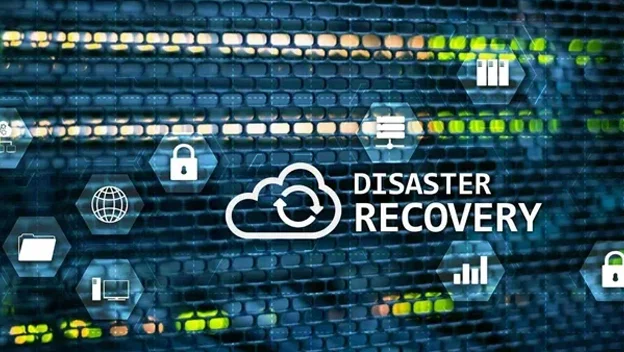
Disaster Recovery as a Service

Restore your data and applications seamlessly without loss using geographically redundant infrastructure for disasters!

Explore
GlassHouse Cloud Services

Backup as a Service

Backup workloads in a secure and high-performance cloud environment to ensure business continuity, data redundancy, and rapid recovery across all scenarios.

Explore
GlassHouse Cloud Services

Monitoring as a Service

Ensure the continuous monitoring and analysis of your infrastructure and application performance data every minute of every day, all year round, from a centralized location with GlassHouse's Monitoring as a Service (MaaS)!

Explore
GlassHouse Cloud Services

Firewall as a Service

Protect your operations from cyber threats by fulfilling your security policy and rule management requirements with a cloud-managed firewall service. Safeguard your business against potential security breaches.

Explore
GlassHouse Cloud Services

Web Application Firewall (WAF) as a Service

Ensure the uptime of your applications by preventing malicious data packets from damaging your application layer!​

Explore
GlassHouse Cloud Services

IPS as a Service

Detect all anomalies in your IT infrastructure instantly and strengthen the immune system of your IT infrastructure.

Explore
GlassHouse Cloud Services

Load Balancer as a Service

Ensure the performance of your web servers against fluctuating network traffic loads with GlassHouse Load Balancer as a Service.​

Explore
GlassHouse Cloud Services

Antivirus as a Service

Maintain the security of all your servers by implementing regular scans and protection against viruses and other threats through a centralized cloud-based control system!

Explore
GlassHouse Cloud Services

Vulnerability Management as a Service

Stay on guard against security vulnerabilities and zero-day attacks! Bid farewell to operational burdens such as version incompatibilities and update management!

Explore
On Premise Solutions
Hardware and Software Solutions
Network and Security Solutions
Professional Services

Blog content that may be of interest to you

What Is Data Science?
06 March 2026

What Is Data Science?

Data science is a multidisciplinary field positioned to derive strategic insights from large and complex datasets (Big Data) and optimize enterprise decision support systems (DSS). By integrating advanced statistics, programming, and machine learning algorithms, data science uncovers hidden trends, correlations, and behavioral patterns within massive data pools. Through data science, organizations can model complex market dynamics, optimize operational workflows, and generate strategic foresight through predictive analytics capabilities. In today’s digital economy, data science has become an indispensable enterprise strategy for achieving sustainable competitive advantage and strengthening data-driven decision-making infrastructures. Discover the details about data science in this article!

Read More
Most Popular AI Image Generation Tools
04 March 2026

Most Popular AI Image Generation Tools

Generative AI-powered image generation tools enable the creation of high-resolution and original visuals within seconds using natural language processing–based text prompts. Innovative platforms such as Midjourney, DALL·E 3, Stable Diffusion, and Canva AI play a strategic role in corporate digital content production, concept design, and marketing operations. These tools, which operate with different licensing and cloud infrastructure models, provide scalable advantages tailored to enterprise needs. Learn more in our article.

Read More
What Is SIEM?
03 March 2026

What Is SIEM?

SIEM is one of the key cybersecurity solutions that enables organizations to collect and analyze security events occurring within their IT infrastructure on a centralized platform and detect potential threats at an early stage. By correlating log data from different systems, SIEM products provide security teams with comprehensive visibility and deliver advantages such as real-time threat detection, rapid incident response, and detailed reporting. Thanks to these capabilities, SIEM solutions are considered one of the fundamental components of modern security operations. In this guide, we examine the technical details of SIEM architecture and its operational working principles.

Read More
What Is Structured Data? Differences Between Structured and Unstructured Data
26 February 2026

What Is Structured Data? Differences Between Structured and Unstructured Data

In today’s data-driven digital economy, data—one of the most strategic enterprise assets for organizations—is stored in two primary architectures: structured and unstructured. Structured data refers to information stored in relational database management systems (RDBMS) in an organized and easily queryable format, whereas unstructured data encompasses text, videos, emails, IoT sensor data, and other content that does not adhere to a predefined data model and is more complex to process. By accurately processing both data types through modern data analytics platforms, organizations can enhance their Decision Support Systems (DSS) and gain a competitive advantage. While structured data enables fast and systematic analysis, unstructured data holds the potential to deliver deep insights; therefore, enterprise data management requires evaluating these two data types within an integrated architecture.

Read More
What Is Natural Language Processing (NLP) and How Does It Work?
25 February 2026

What Is Natural Language Processing (NLP) and How Does It Work?

Natural Language Processing (NLP) is an artificial intelligence technology that analyzes human language and transforms text and speech data into meaningful information. As it requires large data volumes and high processing power, it delivers more scalable, faster, and cost-efficient outcomes when used in conjunction with cloud infrastructures. Details are available in our article.

Read More
Everything You Need to Know About CI/CD Processes
24 February 2026

Everything You Need to Know About CI/CD Processes

CI/CD automates software development processes to ensure that code is delivered to production quickly, securely, and with minimal errors. Through continuous integration and continuous delivery stages, testing, build, and deployment workflows progress without interruption. Cloud infrastructures further enhance this automation with scalable and flexible resource management. Start reading now for detailed insights!

Read More