




Phases of Waterfall Project Management
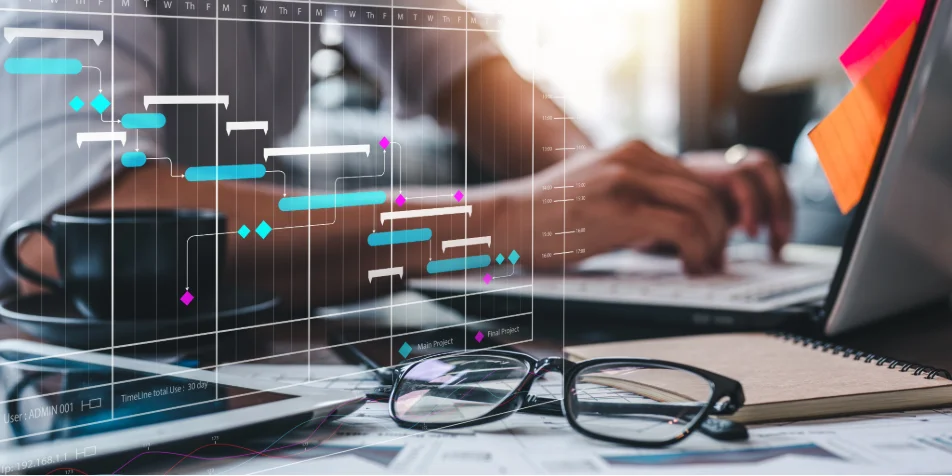
Waterfall project management is a classical approach in which projects progress in a linear and sequential manner. It derives its name from the concept of a waterfall flowing from top to bottom, where each phase must be completed before moving on to the next. The roots of Waterfall project management trace back to non-software industries such as manufacturing and construction. Today, the waterfall model is used across many domains, from digital projects to construction processes, and is considered one of the most established and clearly structured project management methodologies. This model, which is especially preferred in projects where requirements are clearly defined from the outset, stands out with its step-by-step progression. In this article, while elaborating on what Waterfall means, we comprehensively examine the use cases, advantages, and disadvantages of this methodology in enterprise IT projects.
The Waterfall methodology consists of defined and unchanging phases. These phases can be listed as follows:
1. Requirements
The first phase of Waterfall project management is the requirements phase. At this stage, business and system requirements are analyzed in detail, and critical technical documents such as the Scope Document and Software Requirements Specification (SRS) are created. Any inaccurate or incomplete analysis at this stage can negatively impact the entire process.
2. Design
In the second phase, the design phase, the way the system will operate is planned. Technical architecture, data flows, and interface designs are defined.
3. Development
In line with the planned structure, the software development or production process begins. All components are implemented step by step in strict adherence to the design documents. During this phase, teams proceed in accordance with established technical standards and coding principles. All work carried out throughout the process is documented regularly, and progress is tracked according to the project plan. Additionally, once development is completed, it is critical that outputs are complete and compatible to ensure a seamless transition to the next phase, testing.
4. Testing
This phase begins after the development phase is fully completed. The resulting product is tested in detail by Quality Assurance (QA) teams against predefined requirements using comprehensive test scenarios. As a result of these tests, identified bugs and integration issues are resolved before the software is deployed to the production environment.
5. Deployment
The project is completed and deployed or delivered to the client. The deployment or delivery process is also a critical phase during which system performance and architectural stability begin to be observed in the live production environment. Where necessary, minor improvements and bug fixes are implemented to ensure system sustainability.
6. Maintenance
During the maintenance phase, continuous support and improvements are provided to ensure the system remains functional and up to date. System stability is closely monitored, and potential technical issues are addressed promptly.
Advantages and Disadvantages of Waterfall Project Management
The advantages and disadvantages of Waterfall project management can be listed as follows:
| Advantages | Disadvantages |
|---|---|
| Provides a clear and easy-to-understand process flow. | Not flexible to changes. |
| Each phase must be completed before moving to the next, making control easier. | Cost of rework is high. |
| Extensive documentation makes tracking easier. | Errors may be detected late since testing occurs at the end. |
| Works well for large projects with clearly defined scope. | Customer feedback may be delayed until late in the process. |
| Planning and budgeting are more predictable. | Risk increases in long-running projects. |
You may also be interested in our detailed guide on Kanban, an indispensable framework in project management!
Which Projects Should Prefer Waterfall?
Although more flexible methods are prominent today, the waterfall model has not been entirely abandoned. When used in the right type of project, it remains highly effective. If your project has clearly defined, stable, and well-documented requirements, Waterfall can be a strong and reliable choice. However, if you are managing a more dynamic enterprise project where requirements frequently change, flexible approaches such as Agile methodologies and DevOps practices will be much more suitable. For the design and management of cloud infrastructures tailored specifically for your organization’s critical enterprise applications, you can receive professional services from our team! For your critical applications and business processes, you can benefit from our professional team for solutions tailored specifically to your organization! Additionally, it is possible to state that the waterfall project management model is more successful in the following types of projects:
- Projects with clearly defined requirements from the outset,
- Projects with low likelihood of change,
- Sectors requiring strict regulation and documentation such as finance, legal, and healthcare,
- Large-scale projects where risk minimization is critical.
You can also explore our article on Scrum, an agile framework that enables iterative progress by breaking complex projects into smaller, manageable parts. Click to accelerate your digital transformation with our managed cloud services.