





What is the Kanban Technique?
With its origins dating back to 1940s Japan, Kanban is an agile methodology that enables end-to-end visualization of business processes and flow-oriented management. Focusing on workflow continuity, flexibility, and agility, the Kanban technique is implemented today as a standard in many disciplines such as Just-in-Time production, SDLC processes, IT operations management, and digital marketing. This article provides answers to many intriguing questions such as what is Kanban and how workflow processes can be optimized using the Kanban technique.
Derived from Japanese, the word Kanban comes from "kan," meaning "to see or monitor," and "ban," meaning "board or sign." Therefore, answers such as "visual board" or "signboard" can be offered to the question what does Kanban mean. In an industrial sense, the term Kanban was used by Toyota in the 1940s to regulate the workflow on the production line. The Kanban technique aims to increase operational efficiency by visualizing tasks, identifying bottlenecks, and limiting the amount of work being executed simultaneously (WIP - Work in Progress). Discover GlassHouse cloud services now to accelerate your business's digital transformation!
Core Principles of the Kanban Technique
The core principles of the Kanban system are as follows:
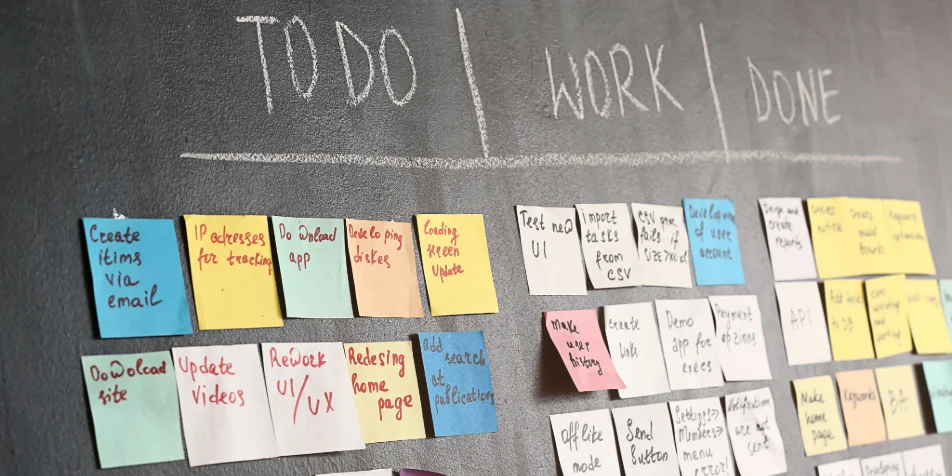
- Visualize the Work: All tasks are displayed using cards on a Kanban board.
- Limit Work in Progress (WIP): As the most critical component of the Kanban architecture, WIP limits prevent system overload, thereby increasing focus and flow speed. For example, the "In Progress" column may be limited to a maximum of 3 tasks.
- Manage the Flow: Process success is measured by tracking "Lead Time" (the time from demand to delivery) and "Cycle Time" (the time from actually starting work to completion).
- Continuous Improvement: Kanban is not static; the process is regularly analyzed and improved.
How Does Kanban Work?
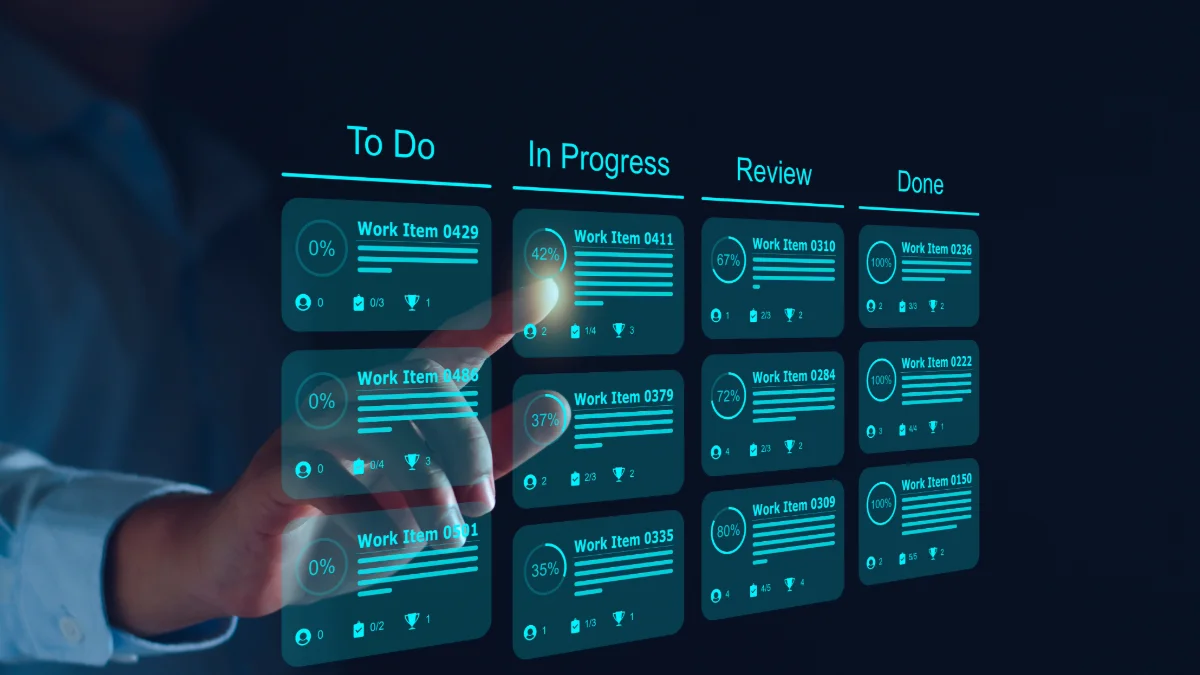
When looking at the general working logic of Kanban systems, it can be said that tasks are displayed in stages on a board. In their simplest form, these stages are as follows:
- To Do
- In Progress
- Done
According to the Kanban technique, each task is represented as a "card" and moves from left to right through the process. This allows the team to clearly see which task is at which stage. Regarding the Kanban working logic, it can also be stated that Kanban is a pull system. While tasks are assigned from the top down regardless of capacity in traditional "Push" systems, in a "Pull" system, team members pull work into the system according to their current capacity. This approach specifically increases efficiency and quality.
Advantages of the Kanban Technique
- The most significant advantage of the Kanban technique is facilitating the tracking of tasks that all team members need to develop and take action on. Consequently, team members know how to proceed without the need for specific directions or instructions.
- It provides corporate transparency and accountability by increasing process visibility.
- It balances the workload, contributing to the creation of a fairer working environment.
- It makes it easier to prioritize between tasks.
- Since there is no mandate for Sprints, it offers a more flexible structure.
- It adapts more quickly to changing priorities and conditions.
- It makes bottlenecks in the workflow visible in real-time.
- It increases quality in the work process by dividing the work into stages, clarifying task sequences, and highlighting process failures and bottlenecks.
- It ensures more effortless communication between teams.
How to Apply Kanban?
Implementing a Kanban application does not require a radical or complex change process in the organizational structure. The most fundamental advantage of Kanban is that it allows for gradual improvement without forcing the existing operational hierarchy into radical change. You can find the step-by-step Kanban implementation guide below:
Make the Existing Workflow Visible
To implement the Kanban technique, you must first make the current workflow visible. While doing this, provide a clear answer to the question "how does the work progress?" For example, in a software team, the process might be: Backlog → Development → Test → Deploy.
Create a Kanban Board
You can use digital tools such as Trello, Asana, or Jira to create a Kanban board. On the Kanban board, process steps should be structured as vertical columns, and individual tasks as digital cards. Each card should contain the task description, the responsible person, priority, and deadline information; furthermore, tasks should move from left to right. Click to understand the importance of digital transformation in businesses!
Limit Work in Progress
In the Kanban methodology, work is limited to create a realistic workflow process. For example, the development column may have a maximum of 3 tasks, and the edit stage a maximum of 2 tasks. This ensures that too many tasks are not started at once, work is not left unfinished, and bottlenecks emerge clearly. If a column is full, the current work must be completed before starting a new task.
Manage Work with "Pull" Logic
As previously mentioned, Kanban is a pull system. This means that senior management does not forcibly distribute work. The team pulls the next task as they have capacity. This approach increases focus, raises work quality, and prevents overloading.
Measure the Flow
The Kanban method is not just about visualization; it requires measurement. In performance tracking, Lead Time, Cycle Time, and Throughput (the amount of work produced per unit of time) are used as primary KPIs. The purpose of measurement is to shorten durations and accelerate flow.
Identify Areas for Improvement
Kanban does not hide problems; on the contrary, it makes them visible. If there is a constant accumulation in a column, there is a problem there. For example, if the edit stage is constantly full, edit capacity may be insufficient. Or, if the testing period is prolonged, improvements in the quality process may be required.
Create a Culture of Continuous Improvement (Kaizen)
Kanban is a dynamic system. Therefore, it is important to ask the following questions at certain intervals: “Which stage is the slowest, which task type takes longer, are WIP limits correct?” Making small but regular improvements is vital in Kanban applications.
Kanban Example
In a content agency, Kanban can be set up as follows: Backlog → Research → Writing → Edit → Client Approval → Publish. WIP limits: Writing: 3, Edit: 2, Approval: 5. This structure helps that agency clarify delivery times, facilitate client tracking, increase team efficiency, and provide significant operational relief, especially in multi-brand management.
Where is the Kanban System Used?
The Kanban method can be applied in many different areas, from optimizing production processes in factories to content and blog management, and from agency projects to human resources and operations processes. Click for more information about Grok, the generative AI assistant developed by xAI!