




What Is Project Management?
From Kanban to Waterfall, Agile to Scrum, CPM (Critical Path Method) to Extreme Programming (XP), there are various project management methodologies designed to serve IT projects of different scales, organizational structures, and business requirements. Among all these methods, you can select the one that best fits the project you are managing and initiate a structured implementation according to the size and scope of the work. In this article, where we answer the question what is project management, you will find detailed insights into the most commonly used project management methodologies.
Project management is the discipline of planning, executing, and controlling human resources, technological infrastructure, and risks within the constraints of scope, schedule, and budget to achieve organizational objectives. In this process, a methodology is selected based on the size of the work and the team structure. According to Project Management Institute (PMI) standards, project management methodologies—which consist of initiation, planning, execution, monitoring & controlling, and closure phases—are fundamentally based on the “Project Management Triangle” (Scope, Time, Cost).
- Project Management Triangle (Iron Triangle): Represents the interdependent relationship and balance between Scope, Time, and Cost constraints that directly impact project success.
- Objective: Refers to achieving the project’s ultimate goal within the defined budget, timeline, and resource constraints.
- Benefit: Project management tools are highly effective in reducing complexity in business processes and optimizing resources. They help minimize risks that may arise during project execution while increasing operational efficiency.

Most Commonly Used Project Management Methodologies
Below, you can find detailed explanations of the most commonly used project management methodologies.
Waterfall
The Waterfall methodology, which adopts a linear and sequential approach, is used for projects where requirements are clearly defined from the outset and phases follow one another in order. As one of the oldest methods, Waterfall consists of multiple stages, and no stage begins until the previous one is completed. Therefore, each phase is an independent step with its own processes. In this model, processes consist of Requirements Analysis, System Design, Implementation, Testing, Deployment, and Maintenance stages. The Waterfall method is extremely easy to understand and implement. Although the strict sequence of phases (gated approach) ensures detailed documentation, resolving an architectural issue identified in later stages (e.g., testing) by returning to earlier phases (e.g., design) is highly costly and difficult. In some cases, if an error occurs at any stage, the project may need to restart from the beginning. Additionally, requirements defined at the start may change over time, requiring a complete restructuring of the project management approach.
Agile
Agile is a dynamic project management approach built on adapting quickly to changing requirements and progressing through complex IT projects by dividing them into small, manageable iterations. Unlike the Waterfall method, instead of defining the entire process upfront with rigid boundaries, Agile emphasizes continuous development through ongoing feedback. In this approach, teams work in time-boxed cycles called “Sprints,” typically lasting 1–4 weeks, and produce a potentially shippable product increment at the end of each Sprint. Customer satisfaction, team communication, and flexibility are at the core of Agile methodology. As the project progresses, emerging requirements or changes are treated as a natural part of the process, allowing rapid adaptation. This enables earlier risk detection and ensures that the final product better aligns with user expectations. Widely used in software development, Agile encompasses sub-methodologies such as Scrum, Kanban, and Extreme Programming. Particularly effective for small and medium-sized teams, this approach enables faster decision-making and continuous improvement, making projects more dynamic.
- Rapid adaptation to changing requirements due to its flexible structure.
- Regular and measurable outputs through short sprints.
- Improved product quality through continuous feedback.
- Enhanced team communication and collaboration.
Scrum
Scrum is one of the most widely used sub-methodologies of the Agile approach and is based on managing projects through short iterative cycles (sprints). In this method, teams focus on completing specific tasks during sprints that typically last between 1 and 4 weeks. At the end of each sprint, a working product increment is delivered, and feedback is gathered to guide the next iteration. Within the Scrum framework, there are three core roles: the Product Owner, who manages the product vision and business value; the Scrum Master, who ensures the process adheres to Scrum principles; and the Agile Team (Developers), who execute the work. Continuous communication, transparency, and rapid feedback mechanisms in Scrum enable projects to be managed in a more controlled and flexible manner.
Kanban
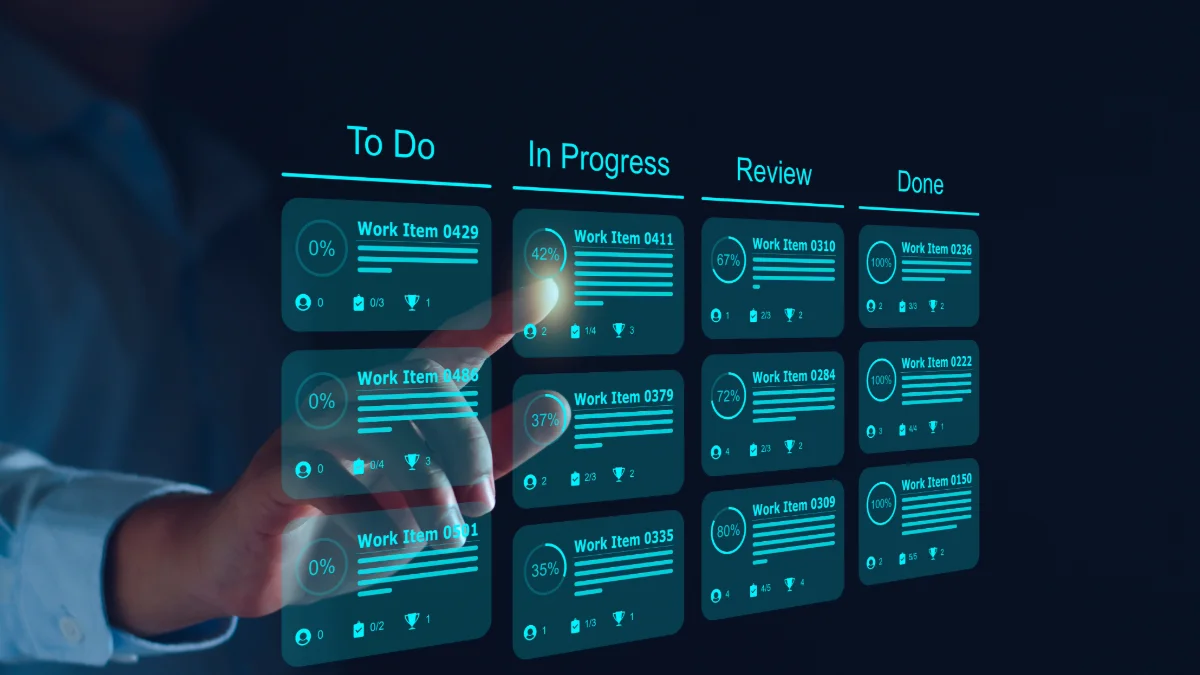
Kanban is among the project management methods that focus on optimizing processes by visualizing workflows. In this approach, work items are tracked on a Kanban Board, which is divided into columns representing stages of the process (e.g., Backlog, To Do, In Progress, Review, Done). The primary objective of Kanban is to identify bottlenecks in workflows and distribute workload evenly. Unlike fixed time cycles, this method operates on a continuous flow principle, making it highly effective for operational tasks and projects requiring continuous tracking. Thanks to its flexible structure, teams can easily update priorities and improve process efficiency.
You can also explore our article titled "What Is Kanban?" for more detailed insights on the topic.
Critical Path Method (CPM)
The Critical Path Method (CPM), which provides a deterministic and schedule-focused approach to how to manage a project, is based on mapping all project activities into a network diagram and analyzing dependencies to calculate the longest path required to complete the project (the “critical path” with zero float). This method clearly defines the total project duration and helps identify tasks that may cause delays in advance. Particularly preferred in large and complex projects, CPM contributes to more efficient resource utilization by optimizing time management.
Lean
Lean is a project management approach that focuses on eliminating waste and making processes as efficient as possible. This methodology emphasizes removing unnecessary steps and concentrating on value-creating activities. Commonly used in manufacturing and operations, Lean minimizes time, cost, and labor losses while enabling faster and higher-quality outputs. With its continuous improvement principle, Lean allows teams to regularly review and enhance their processes, making it a frequently adopted approach among suitable teams.
Extreme Programming (XP)
Extreme Programming (XP), specifically designed for software development teams within project management processes, is an Agile methodology that prioritizes high quality and rapid feedback. This approach emphasizes engineering practices such as Continuous Integration, Test-Driven Development (TDD), Pair Programming, and frequent releases. XP places strong importance on customer feedback, enabling rapid adaptation to changing requirements while ensuring the resulting product is more stable and user-focused.
The Importance of Project Management Methodologies in Cloud Architecture
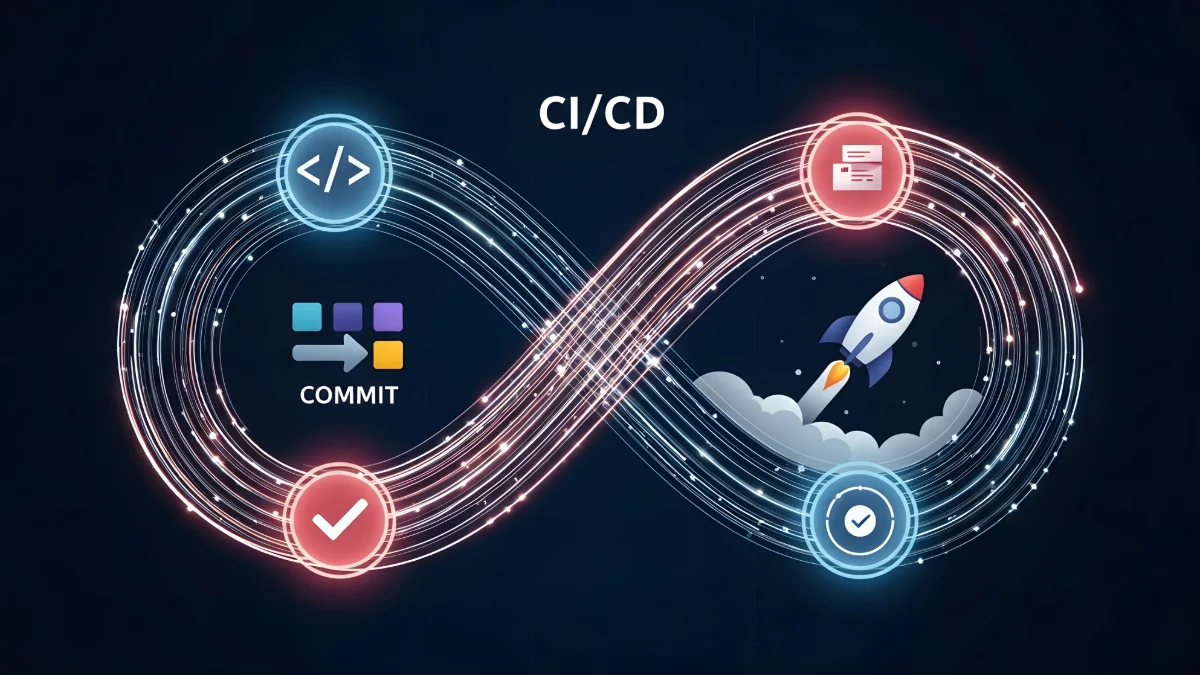
Projects executed with cloud architecture offer advantages such as flexibility, scalability, and speed, while also requiring proper planning and coordination. At this point, project management methodologies play a critical role in ensuring that processes progress in a controlled manner. Especially in cloud-based projects where DevOps practices are implemented, microservices architectures are used, and continuous integration/continuous delivery (CI/CD) processes are operated, approaches such as Agile, Scrum, or Kanban make workflows far more transparent, flexible, and manageable. Choosing the right methodology not only optimizes resource utilization but also helps identify potential risks at an early stage. As a result, project duration is shortened, while the quality and sustainability of the final product are significantly improved.