



What Is Monitoring?
Today, digital platforms must operate with high availability to ensure seamless business processes and uninterrupted service delivery to all stakeholders. Whether it is an e-commerce website, a mobile application, or enterprise software, they all share a common requirement: their performance must be continuously monitored and kept under control. At this point, monitoring comes into play. Properly designing monitoring processes in IT infrastructures is essential for sustainable system management. So, what is monitoring, how is it implemented, and why does it matter? The details are in our blog post.
At its most fundamental level, the answer to what is monitoring can be summarized as continuously tracking system performance and status. This process includes analyzing servers, applications, networks, and databases based on specific metrics. Monitoring, its Turkish equivalent, is not merely about observing a system. It also involves generating meaningful insights from observations, detecting anomalies, and taking automated actions when necessary. In this context, monitoring processes are no longer a luxury but a necessity. Especially in systems where user experience is directly tied to revenue, even a few minutes of downtime can lead to significant losses. For instance, situations such as a sudden spike in CPU usage, disk space nearing capacity, or a service becoming unresponsive are detected instantly. With the technologies and software used in this process, system administrators can resolve potential issues before users even notice them. This not only increases user satisfaction but also reduces operational workload.
From a more technical perspective, what does monitoring mean? In IT infrastructure, this concept refers to the real-time tracking of all system components. It is not limited to hardware-level servers; rather, it represents a multi-layered structure that includes network traffic, application performance (APM), database queries, and end-user experience. In this context, the question what is IT monitoring becomes significant. IT monitoring refers to the end-to-end monitoring of an organization’s entire information technology infrastructure. This enables a much clearer analysis of topological dependencies between system components and allows rapid identification of the root cause of any issue (Root Cause Analysis - RCA). For example, the slowdown of a web application may not be solely server-related. Network latency, database performance, or an external third-party API service could also be the source of the bottleneck. Through Monitoring, all these components are analyzed together to provide accurate diagnosis. If you would like to gain more detailed insights into network security, you can review our blog post titled What Is a Network Security Key and a Switch?.
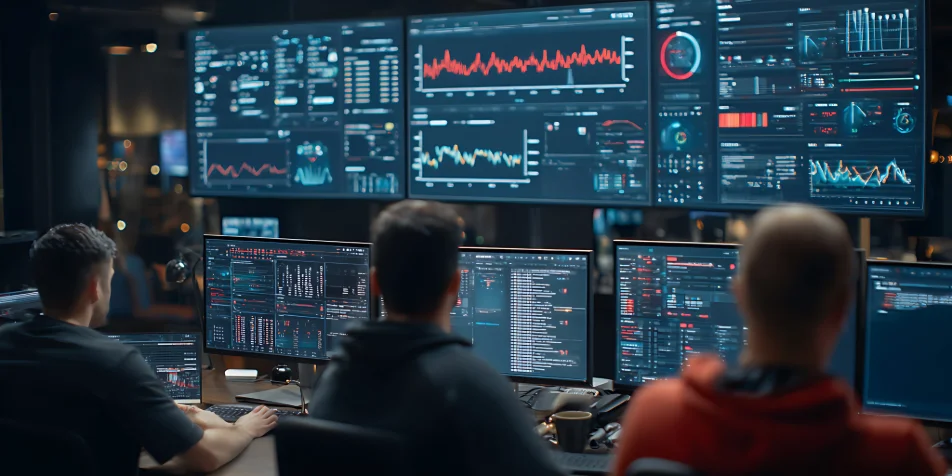
How Is Monitoring Implemented?
To establish an effective monitoring process, the right tools and strategies must be combined. At this point, monitoring tools play a significant role. A monitoring process built using these tools typically includes the following steps:
- Defining the metrics to be monitored (CPU, RAM, network, etc.)
- Establishing data collection processes
- Configuring alert and notification mechanisms
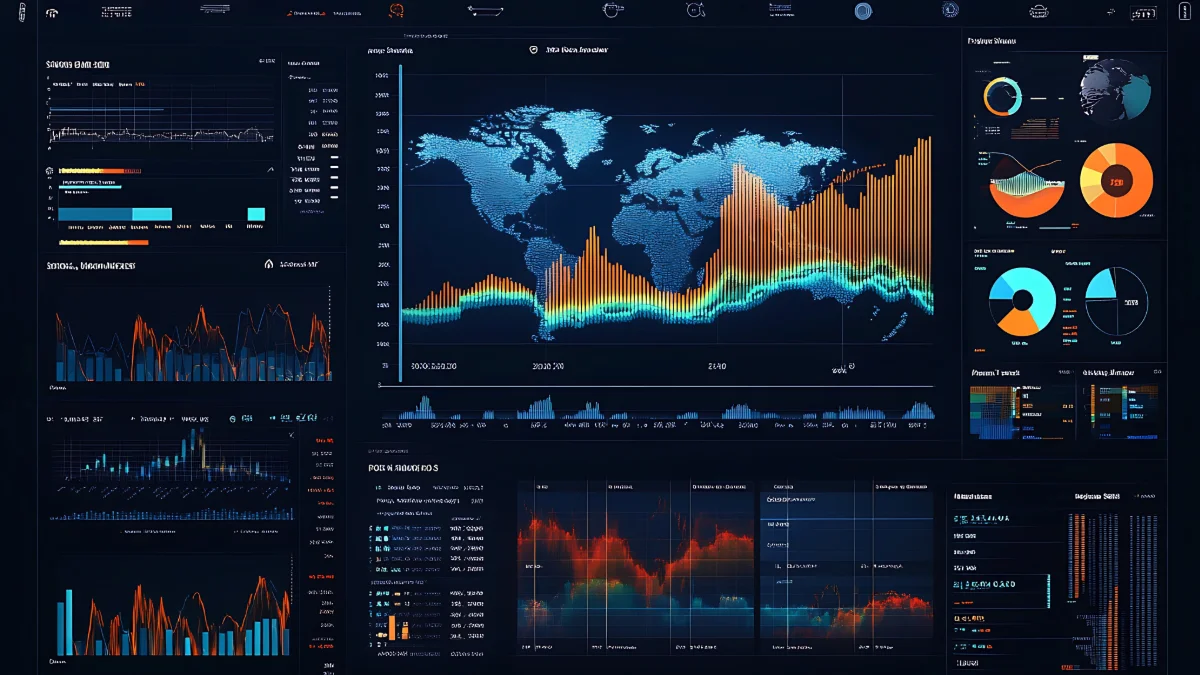
- Creating dashboards and reporting systems
On the development side, more specific in-application monitoring approaches such as c# monitoring come into play. In this approach, error logs, performance data, and user interactions are analyzed in detail through code segments integrated into the application. Monitoring solutions offered through the Managed Services model are quite common. With these systems, infrastructures across different locations can be monitored and managed through a single panel. Such solutions significantly enhance operational efficiency, especially for large-scale enterprises.
Why Is Monitoring Important in Software?
In the software world, a completely error-free system is nearly impossible. What matters, however, is how quickly you can detect and resolve errors. This is where monitoring plays a critical role. First and foremost, monitoring provides a proactive approach, meaning issues are identified before they escalate. This minimizes downtime and preserves the user experience.
In addition, proactive monitoring processes ensure the uninterrupted operation of Business Continuity and Disaster Recovery scenarios. Continuous system availability represents a critical competitive advantage, especially for businesses delivering digital services. Therefore, monitoring is not only a technical process but also a strategic investment. In short, with a well-designed monitoring infrastructure, systems become more stable, secure, and high-performing. This not only simplifies the work of technical teams but also delivers a higher-quality experience to end users. You can also explore GlassHouse’s Hardware and Software Solutions to make your processes more proactive and technologically advanced, gaining both short- and long-term advantages for your business.