





What Is a Man-in-the-Middle (MitM) Attack?
From the theft of sensitive data and financial fraud to communication manipulation and credential harvesting, Man-in-the-Middle (MitM) attacks are among the most critical cyber risks facing organizations. Continue reading to learn more about Man-in-the-Middle (MitM) attacks, as well as cyber recovery and proactive network security measures designed to protect against them.
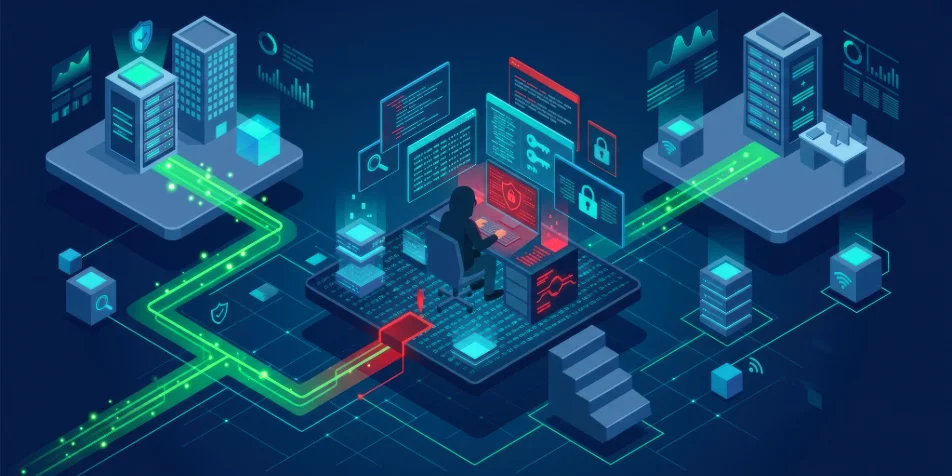
What is a Man-in-the-Middle attack? It can be defined as a type of cyberattack in which an attacker intercepts and manipulates the data traffic between a user's endpoint and a server. Attackers typically eavesdrop on or monitor traffic over unsecured or public Wi-Fi networks. Another common technique involves redirecting traffic by associating the IP addresses of devices on a local network with the attacker's own MAC address. In the final stage, attackers bypass encryption layers using SSL stripping techniques or fraudulent certificates. The following list outlines the key characteristics of Man-in-the-Middle attacks.
- They can secretly monitor internal corporate data traffic and capture user information.
- They can lead to the theft of sensitive information, including credentials, passwords, and financial data.
- They are commonly carried out over public or poorly secured networks used by employees.
- They can modify data packets to redirect users to fraudulent websites.
- They can target SSL/TLS encryption layers, making secure connections vulnerable.
- They can manipulate corporate communication processes, resulting in financial and operational losses.
- Because they can remain undetected for extended periods, they pose a significant security risk to organizations.
How Do MitM Attacks Threaten Organizations?
After understanding what a Man-in-the-Middle attack is, it is also important to examine the risks it poses to enterprise environments. Below are some possible scenarios illustrating how a Man-in-the-Middle attack can harm businesses and organizations:
- They Can Target Sensitive Data: During a MitM attack, attackers can monitor the flow of data between employees and corporate systems. Critical information such as customer data, financial records, contracts, and trade secrets can be intercepted, resulting in data breaches.
- They Can Disrupt Financial Processes: Attackers can alter payment instructions or create fraudulent payment requests, causing organizations to suffer financial losses. This can create significant financial risks, particularly within accounting and procurement processes.
- They Can Manipulate Communications: Internal corporate email or messaging traffic can be altered to deliver false information to employees. This can disrupt operational processes, lead to poor decision-making, and damage brand credibility.
- They Can Steal Credentials: Usernames, passwords, and authentication data can be captured, enabling unauthorized access to corporate systems. As a result, attackers may launch broader cyberattacks within the corporate network.
What Measures Can Be Taken Against MitM Attacks?
The security measures your organization can implement to defend against Man-in-the-Middle attacks are listed below.
- Strong Encryption: Using robust encryption protocols such as SSL/TLS makes it significantly more difficult for unauthorized parties to read data traffic. Encrypted communication helps prevent attackers from analyzing intercepted data packets.
- IPS as a Service: Intrusion Prevention Systems (IPS) can analyze suspicious network activity to detect and block MitM attacks at an early stage. Cloud-based IPS services provide proactive protection, particularly for large-scale enterprise networks.
- VPN Usage: Requiring employees to use a VPN, especially when connecting through public networks, ensures that data traffic is transmitted through secure tunnels. This helps reduce the risks of eavesdropping and traffic manipulation.
- Internal Employee Training: Educating employees about rogue networks, phishing attempts, and secure connection practices can reduce human-related security vulnerabilities. Regular cybersecurity awareness training can significantly lower the risk of successful attacks.
- Up-to-Date Firewall: Continuously updated firewall solutions can filter suspicious connections and prevent unauthorized access attempts. Regular monitoring of network traffic also provides an additional layer of security.
You may also be interested in our article titled What Is Ransomware?.